Verdict
Head-to-head · Best Mirrorless Cameras For Travel

Fujifilm X-S20 vs Sony α7 IV

Which is the better buy? Side-by-side on rating, price, strengths, and watch-outs — with the published ratings we averaged to get there.

Verdict is reader-supported. As an Amazon Associate we earn from qualifying purchases. Some links on this page are affiliate links — if you click through and buy, we may earn a small commission at no extra cost to you. Our ratings are sourced from independent publications, not sponsors.
The short answer

Sony α7 IV comes out ahead by a narrow margin (4.3 vs 4.4). The gap is mostly about Hybrid photo and video shooters — read the strengths below before deciding.

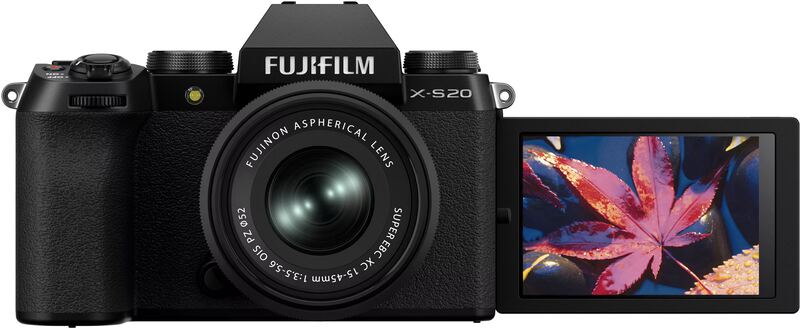
Fujifilm X-S20
Ranked #3 in Best Mirrorless Cameras For Travel
Fujifilm X-S20
4 sources3 derived$1,499as of Aug 1

The Fujifilm X-S20 is a midrange APS-C mirrorless camera that builds on the X-S10 with better video features and friendlier handling. Reviewers noted the enhanced 5-axis stabilization, 4K video with F-Log2 support, and a dedicated vlog mode. A larger grip makes room for a bigger battery, and there is a headphone jack. Battery life caps at 750 shots, and recording time is constrained without the optional FAN-001 cooling fan. Beginners and intermediate users who want one camera for both photography and video work are the fit.

Strengths
  • 26MP X-Trans BSI-CMOS sensor delivers high-resolution images
  • 5-axis in-body image stabilization rated to 7 stops
  • Enhanced video capabilities with 4K/60 4:2:2 10-bit internal recording
Watch-outs
  • Battery life limited to 750 shots per charge
  • Video recording time is constrained without cooling fan
Sony α7 IV
Higher ratedRanked #2 in Best Mirrorless Cameras For Travel
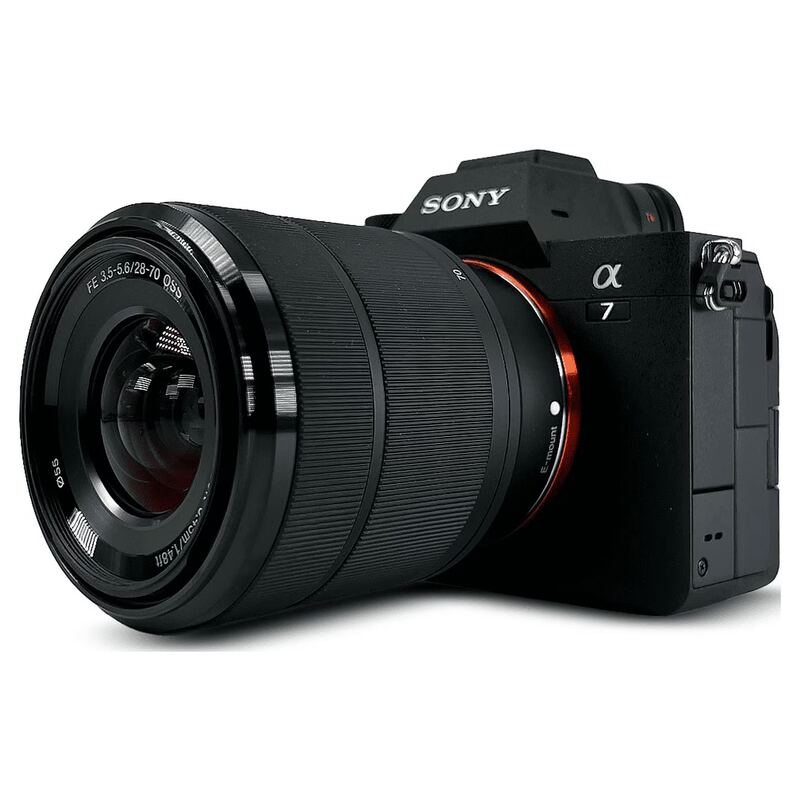
Sony α7 IV
4 sources$2,198as of Aug 1

The Sony α7 IV is a full-frame mirrorless camera built around a 33MP back-illuminated Exmor R CMOS sensor and Sony's BIONZ XR processor, with Fast Hybrid AF across 759 phase-detection points, 5-axis in-body stabilization and 4K 60p 10-bit 4:2:2 video. Only one review cited on this page tested this generation of the camera: wedding and portrait photographer Myles Katherine, who scored it 87 out of 100, found it "intuitive" and "user-friendly", praised the dual card slots and low-light handling, and shot a six-hour wedding on a single charge. Her reservations are specific rather than general: the electronic viewfinder image "just isn't the best", there is no built-in multiple exposure function, which she calls a dealbreaker for her own work, and the battery "died really quickly" once it dropped below about 11 percent. At roughly 658 g it is a hybrid stills-and-video body rather than the lightest thing in this guide.

Strengths
  • 33MP full-frame Exmor R CMOS sensor resolves noticeably more detail than the 24MP generation it replaced
  • BIONZ XR image processing engine, which Sony rates at up to 8x the processing performance of the engine it replaces
  • 0.5-type Quad-VGA OLED viewfinder with 100% coverage and 3,686,400 dots
Watch-outs
  • Electronic viewfinder image quality underwhelms: Myles Katherine, who shoots through the finder, found "the quality of the image in the electronic viewfinder just isn't the best"
  • Multiple exposures must be assembled later in software; Myles Katherine calls the absent in-camera function "a dealbreaker" for her own work
  • Battery falls off a cliff at the end of its charge: Myles Katherine found that "once it got to about 11% battery, it died really quickly after that"

Derived means the reviewer published no score, so one was inferred from their written verdict. Everything else is a number the publisher printed. How we rank.

How they stack up

Fujifilm X-S20

Unlike the Sony ZV-E10 II, which lacks an EVF and has modest battery life, the Fujifilm X-S20 offers a more robust battery and dedicated vlog mode, making it better suited for extended video work. Compared to the Canon EOS R50, it provides superior video capabilities with 4K/60 4:2:2 10-bit internal recording, though it lacks the R50's affordable price point and lens ecosystem.

Sony α7 IV

The Sony α7 IV is the only full-frame camera in this guide: against the APS-C Canon EOS R50 it brings a 33MP full-frame sensor and 5-axis in-body stabilization the R50 does not have at all. It matches the Fujifilm X-S20's 4K/60 10-bit 4:2:2 video rather than lacking it, but the X-S20 weighs 413 g against the α7 IV's 658 g, and for a travel buyer that is the trade actually being made. Against the Nikon Z5II it is the lighter body (658 g against 700 g) with the higher-resolution sensor (33MP against 24MP), while the Z5II shoots faster bursts (11 fps against 10 fps); both cameras have two card slots.

Specs side-by-side

SpecFujifilm X-S20Sony α7 IV
Sensor26MP X-Trans BSI-CMOS33MP full-frame Exmor R CMOS (35.9 x 23.9 mm)
Stabilization5-axis in-body5-axis in-body image stabilization
Video4K/60 4:2:2 10-bit4K 60p 10-bit 4:2:2 (Super 35 crop), full width to 4K 30p
AutofocusHybrid AF (117 contrast / 425 Phase Detect points)Fast Hybrid AF, 759 phase-detection points (full frame)
Burst RateUp to 20 fps (up to 30 fps with 1.25x crop)10 fps
Display3" 1.84M-dot fully articulating touchscreen3.0-type vari-angle touchscreen TFT, 1,036,800 dots
EVF0.39-in OLED EVF, 0.62x magnification, 100Hz0.5-type Quad-VGA OLED, 3,686,400 dots, 100% coverage
Weight413g658 g
← See the full ranking of best mirrorless cameras for travel