Verdict
Head-to-head · Best Mirrorless Cameras For Travel

Fujifilm X-T5 vs Sony α7 IV

Which is the better buy? Side-by-side on rating, price, strengths, and watch-outs — with the published ratings we averaged to get there.

Verdict is reader-supported. As an Amazon Associate we earn from qualifying purchases. Some links on this page are affiliate links — if you click through and buy, we may earn a small commission at no extra cost to you. Our ratings are sourced from independent publications, not sponsors.
The short answer

Sony α7 IV comes out ahead by a narrow margin (4.2 vs 4.4). The gap is mostly about Hybrid photo and video shooters — read the strengths below before deciding.

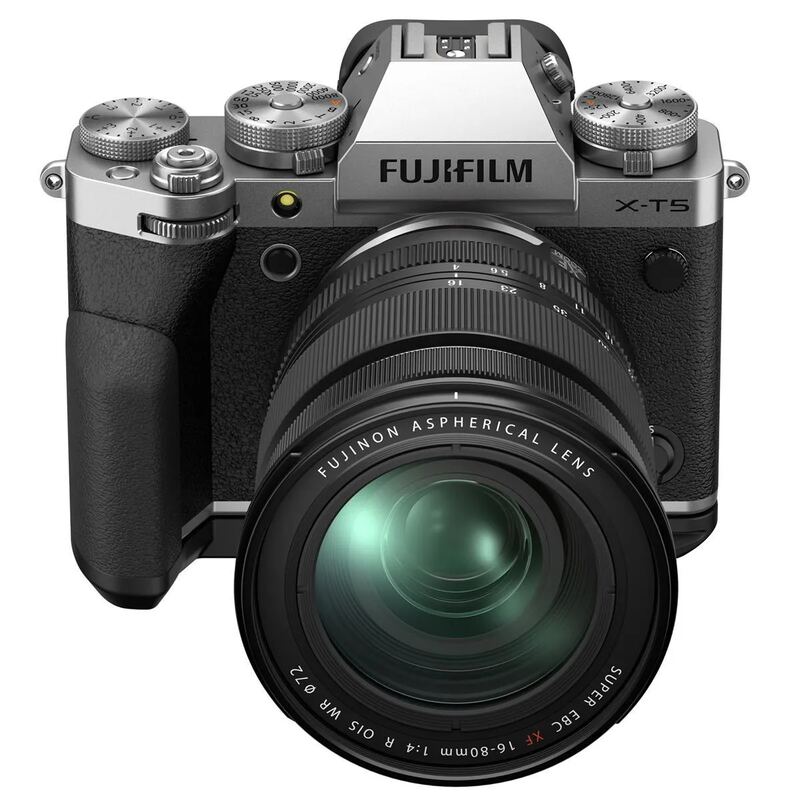
Fujifilm X-T5
Ranked #5 in Best Mirrorless Cameras For Travel
Fujifilm X-T5
4 sources2 derived$1,999.95as of Aug 1

The Fujifilm X-T5 is a photography-first 40MP APS-C mirrorless camera that continues Fujifilm's tradition of physical control dials and traditional handling. Reviewers praised the high-resolution sensor, 15fps shooting capability, and 7.0EV in-body stabilization for handheld work. The two-axis tilting screen comes up as especially useful for off-axis compositions. It has none of the video ambitions of its sibling X-H2: no 8K capture, no ProRes modes, and shorter burst durations because it uses SD cards. Photographers who value physical controls and image quality over video range, particularly in documentary, wedding, and sport work, get the most from its reliability and detail retention.

Strengths
  • 40MP BSI CMOS sensor with X-Trans color filter array delivers high detail and cropping flexibility
  • Up to 15fps continuous shooting with mechanical shutter for fast action photography
  • In-body stabilization rated at up to 7.0EV for handheld shooting in low light
Watch-outs
  • Smaller buffer and SD card usage limits long burst shooting compared to X-H2
  • Video specs are less ambitious than X-H2 with no 8K capture or ProRes modes
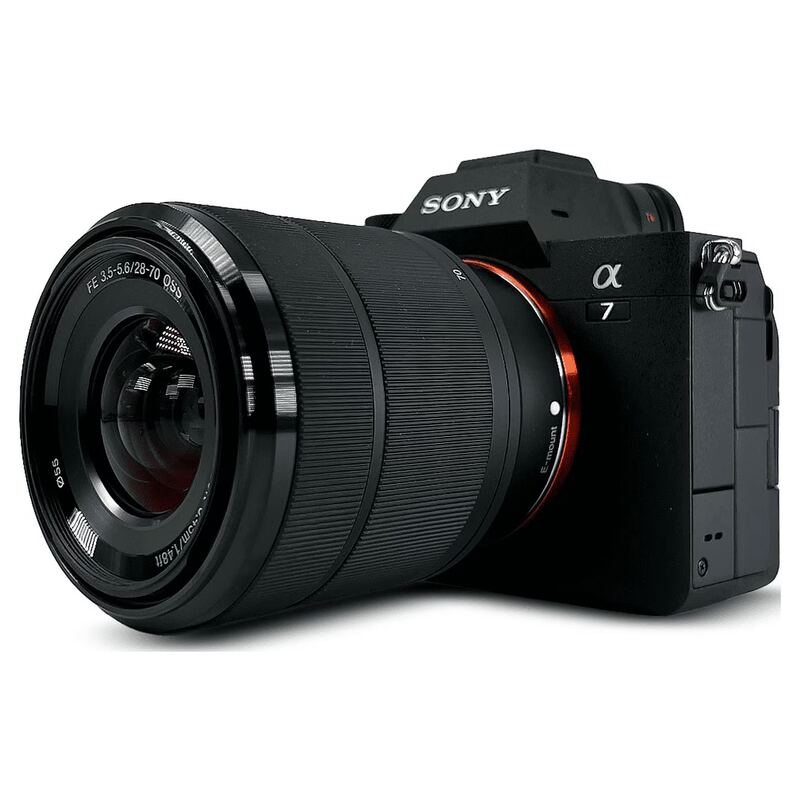
Sony α7 IV
Higher ratedRanked #2 in Best Mirrorless Cameras For Travel
Sony α7 IV
4 sources$2,198as of Aug 1

The Sony α7 IV is a full-frame mirrorless camera built around a 33MP back-illuminated Exmor R CMOS sensor and Sony's BIONZ XR processor, with Fast Hybrid AF across 759 phase-detection points, 5-axis in-body stabilization and 4K 60p 10-bit 4:2:2 video. Only one review cited on this page tested this generation of the camera: wedding and portrait photographer Myles Katherine, who scored it 87 out of 100, found it "intuitive" and "user-friendly", praised the dual card slots and low-light handling, and shot a six-hour wedding on a single charge. Her reservations are specific rather than general: the electronic viewfinder image "just isn't the best", there is no built-in multiple exposure function, which she calls a dealbreaker for her own work, and the battery "died really quickly" once it dropped below about 11 percent. At roughly 658 g it is a hybrid stills-and-video body rather than the lightest thing in this guide.

Strengths
  • 33MP full-frame Exmor R CMOS sensor resolves noticeably more detail than the 24MP generation it replaced
  • BIONZ XR image processing engine, which Sony rates at up to 8x the processing performance of the engine it replaces
  • 0.5-type Quad-VGA OLED viewfinder with 100% coverage and 3,686,400 dots
Watch-outs
  • Electronic viewfinder image quality underwhelms: Myles Katherine, who shoots through the finder, found "the quality of the image in the electronic viewfinder just isn't the best"
  • Multiple exposures must be assembled later in software; Myles Katherine calls the absent in-camera function "a dealbreaker" for her own work
  • Battery falls off a cliff at the end of its charge: Myles Katherine found that "once it got to about 11% battery, it died really quickly after that"

Derived means the reviewer published no score, so one was inferred from their written verdict. Everything else is a number the publisher printed. How we rank.

How they stack up

Fujifilm X-T5

The Fujifilm X-T5 outperforms the Sony α6400 in burst rate and in-body stabilization, but unlike the Canon EOS R7, it lacks the higher resolution sensor and 30 fps electronic shutter capabilities. Compared to the Sony α6700, it offers a more affordable price point and better video features, though the α6700 provides more advanced processor and better video specs.

Sony α7 IV

The Sony α7 IV is the only full-frame camera in this guide: against the APS-C Canon EOS R50 it brings a 33MP full-frame sensor and 5-axis in-body stabilization the R50 does not have at all. It matches the Fujifilm X-S20's 4K/60 10-bit 4:2:2 video rather than lacking it, but the X-S20 weighs 413 g against the α7 IV's 658 g, and for a travel buyer that is the trade actually being made. Against the Nikon Z5II it is the lighter body (658 g against 700 g) with the higher-resolution sensor (33MP against 24MP), while the Z5II shoots faster bursts (11 fps against 10 fps); both cameras have two card slots.

Specs side-by-side

SpecFujifilm X-T5Sony α7 IV
Sensor40MP BSI CMOS33MP full-frame Exmor R CMOS (35.9 x 23.9 mm)
StabilizationUp to 7.0EV5-axis in-body image stabilization
Video6.2K/30p, 4K/60p4K 60p 10-bit 4:2:2 (Super 35 crop), full width to 4K 30p
Autofocus425-point phase-detect with subject detectionFast Hybrid AF, 759 phase-detection points (full frame)
Burst RateUp to 15fps10 fps
Display3.0" 1.84M dot two-axis tilt3.0-type vari-angle touchscreen TFT, 1,036,800 dots
EVF3.69M-dot OLED0.5-type Quad-VGA OLED, 3,686,400 dots, 100% coverage
Weight557g (19.6oz)658 g
← See the full ranking of best mirrorless cameras for travel