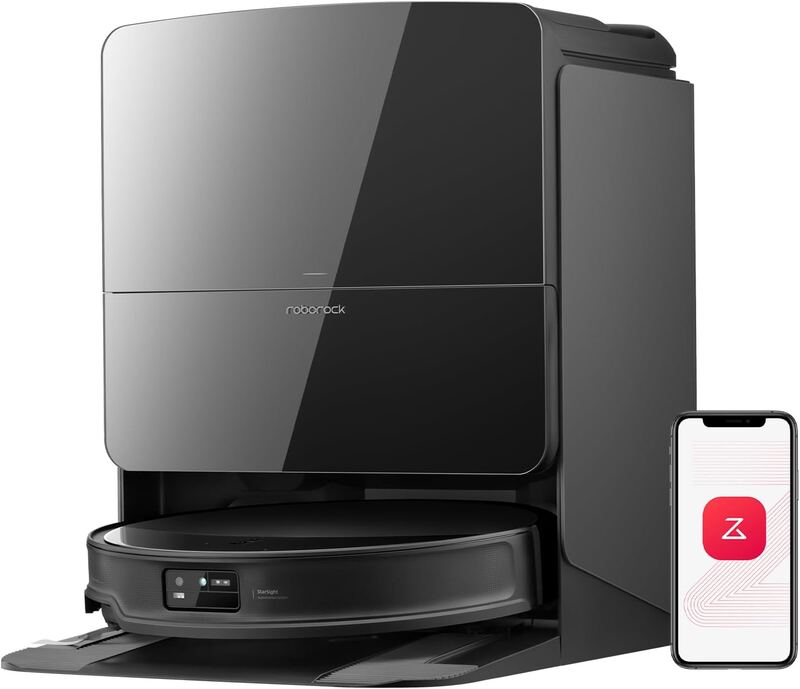
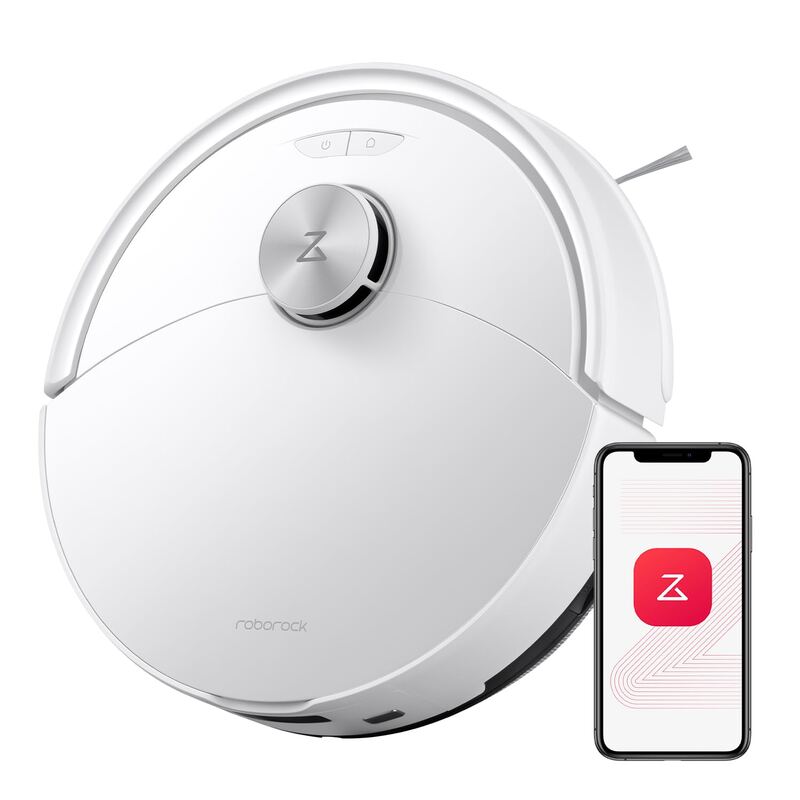
The Roborock Saros 20 delivers strong performance in both vacuuming and mopping, with powerful suction and effective cleaning technology. It features a self-cleaning dock and quiet operation, but comes at a steep price point and has a bulky base station that's difficult to relocate. The device is well-suited for users seeking premium cleaning capabilities but may be overkill for those with simpler needs or budget constraints.
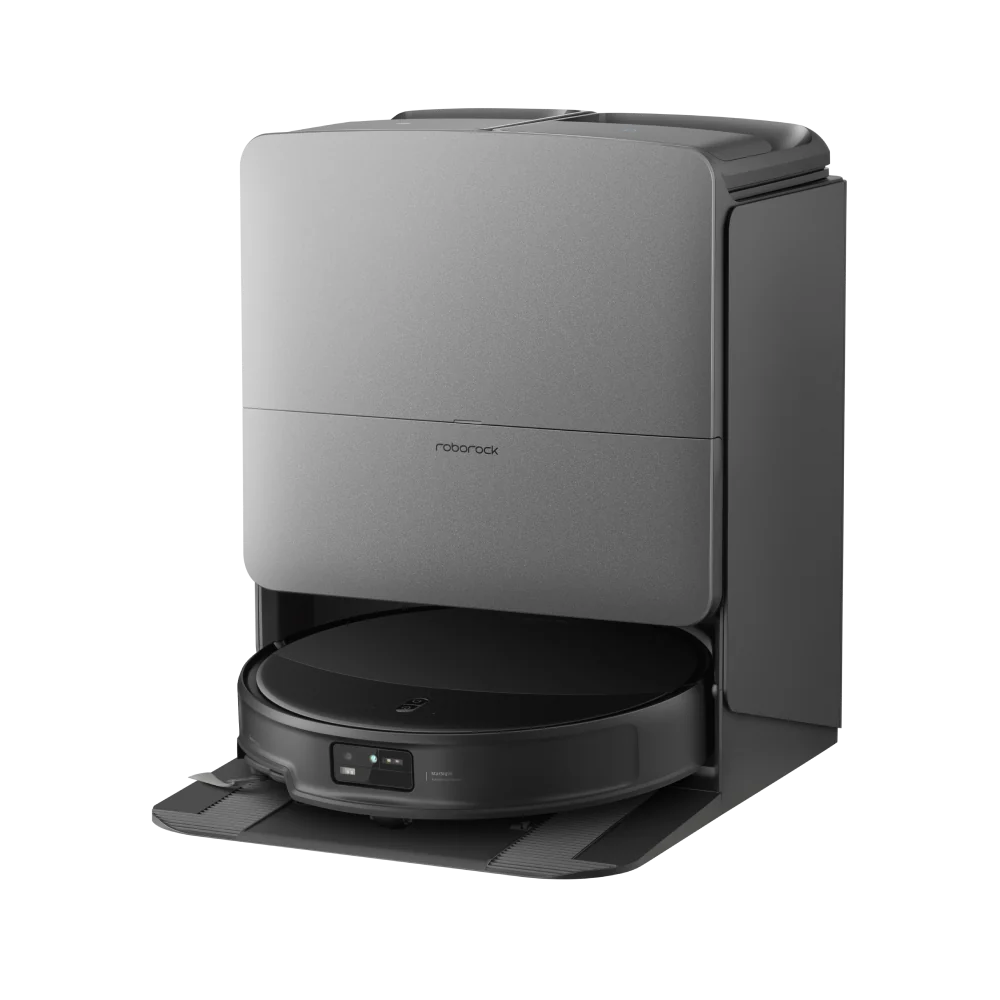
Full review
Suction power and cleaning performance
The Roborock Saros 20 delivers a substantial 36,000 pascals of suction power, representing a significant upgrade from its predecessor. This enhanced suction enables the robot to effectively pick up debris and dust from both hard floors and carpets. During testing, it demonstrated consistent performance in removing pet hair, with the split brush design preventing tangles that commonly occur with other models. The mopping performance utilizes two round mopping pads that extend to the sides, though this design has limitations in heavily soiled environments where the pads aren't continuously cleaned during operation. The robot's cleaning effectiveness was validated through multiple cleaning cycles, with one reviewer finding it capable of removing ketchup residue after a second pass, though the initial cleaning spread some of the spill across the floor.
Navigation and mapping capabilities
This upgrade allows the robot to recognize over 300 types of objects and provides a sleeker profile that enables cleaning under furniture with just 3.13 inches of clearance. The mapping process is notably efficient, with one reviewer reporting that it mapped a one-bedroom apartment in just 12 minutes. The robot correctly identified furniture placement, carpeted areas, and room divisions, though manual editing was still required for optimal accuracy. The system's object recognition capabilities were praised, correctly identifying power strips, cables, and even labeling furniture as 'easily trapped' to prevent the robot from getting stuck. However, the robot's ability to avoid smaller objects remains inconsistent, with one reviewer noting it still gets trapped occasionally and sometimes eats cords on patterned rugs.
Docking station and maintenance features
The docking station represents a significant advancement in self-cleaning capabilities, featuring a 4-liter fresh water tank and 3.5-liter dirty water tank. The station heats water to 212°F for mopping and cleaning pads, then dries them with 131°F air, effectively sterilizing the pads and preventing bacterial spread. This system eliminates the need for manual pad washing, with one reviewer noting they only needed to throw pads into the washing machine twice a year for additional cleaning. The dock also automatically empties debris into a dust bag and refills water and detergent for mopping. The station's design allows for easy access to both the water tank and detergent compartment, though the front and top panels must remain accessible for maintenance. The dock's rapid charging capability brings the vacuum back to 100% in just two and a half hours, significantly faster than previous models.
App functionality and user experience
The app interface is described as surprisingly approachable despite offering numerous cleaning modes, including Deep, Deep+, After Meals, and Intensive Sweeping. One reviewer noted that while the app provides a wealth of options, it feels complicated for the sake of being complicated, with the standard Full Cleaning mode covering most needs. The app allows for multi-level mapping, though it requires some navigating to access the correct settings. The system's voice control functionality works with Alexa, Siri, and Google Home, and one reviewer found it particularly useful for issuing commands without needing a smart speaker. The scheduling feature was noted as more complicated to set up, and the robot's ability to detect and respond to spills was inconsistent, requiring manual intervention for problematic areas like ketchup stains. The app also allows for customization of cleaning patterns, no-go zones, and invisible walls through a zoomable floor map interface.
Design and physical characteristics
This slim profile allows it to clean under furniture and in tight spaces where other models might struggle. The design includes a split brush system to prevent hair tangles, which proved effective during testing. The base station, though functional, was criticized for looking cheaper than previous models, and the power cable's 110cm length requires careful placement near electrical outlets. The robot's appearance is described as average, with no wildly different styling from previous models, though the compactness and modern lines make it visually appealing in most home settings.
Limitations and recurring issues
Despite its advanced features, the Saros 20 has several notable limitations that affect its overall performance. The robot's mopping system's reliance on periodic cleaning at the dock rather than continuous cleaning during operation results in less effective cleaning in heavily soiled environments. One reviewer noted that ketchup stains were not fully removed on the first pass, requiring a second cleaning cycle. The robot's AI stain detection doesn't reliably pick up on spills, requiring manual intervention for problematic areas. Additionally, the dock's design has been criticized for looking cheaper than previous models, and the scheduling feature was noted as difficult to set up. The robot occasionally gets stuck, particularly on patterned rugs where it sometimes eats cords, and the voice command system could be better implemented. The need for physical movement of the base station between floors was also problematic, requiring manual relocation for multi-level cleaning.
Strengths
- +Powerful suction with 36,000 pascals of official suction rating
- +Effective mopping with dual mop pad design spinning at 200 RPM
- +Self-cleaning dock with boiling hot water mopping and automatic drying
- +Quiet operation during cleaning cycles
Watch-outs
- −Heavy base station that is difficult to move between floors
- −High price point
How it compares
The Roborock Saros 20 stands out with its powerful 36,000 pascals suction and self-cleaning dock with boiling hot water mopping, which the Dreame D30 Ultra and Shark PowerDetect UV Reveal lack. However, unlike the Roborock Saros 10R, it doesn't offer the ultra-slim design or advanced 3D navigation, and its heavy base station is a drawback compared to more portable models like the Roomba J7.
Rating sources
Our 4.1 score is the average of the 5 scored reviews above; 3 more reviewed it without printing a score and are not in the average. More about methodology.